|
Assyria (HD 38529) System
System: Assyria
Primary Star:
HD 38529
Stellar Type:
G4V
Companion
Star(s): None
Distance from Earth: 138 ly
Constellation: Orion
Region:
Inner
Population:
960 Million
Summary:
The Assyria system contains two planets discovered in 2000, a hot Jupiter and a brown dwarf,
and five discovered later. The most interesting thing about the system is the
brown dwarf orbiting inside the habitable zone. The brown dwarf has four large
moons orbiting it with the inside one being very much Earthlike. On this world
a large population of nearly a billion has grown.
|
|
|
|

|
Assyria b
|
|
This ¾ Jupiter
mass world was discovered in 2000. The world is a dark hot Jupiter orbiting
only 0.13 AU from the star giving it a temperature of 1100 K.
|
|
|
|
|
|
|
|
|
|

|
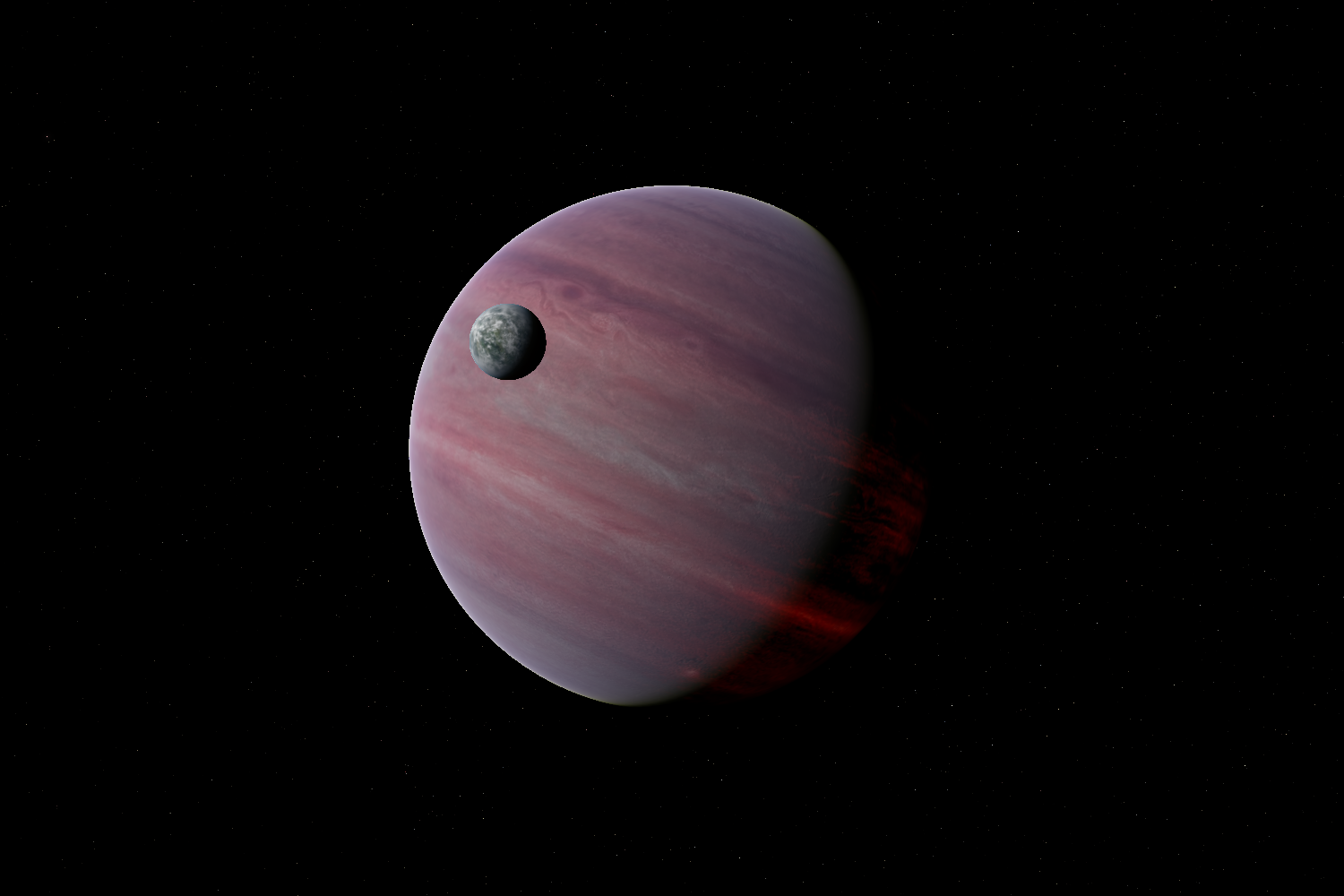
Assyria
c
|
|
Discovered in
2000, a 13 Jupiter mass brown dwarf has an eccentric orbit around the star.
This orbit takes from the middle of the habitable zone to just outside it.
The brown dwarf gives off heat helping keep the first moon warm enough for
life.
|
|
|
|
|
|
|
|

|
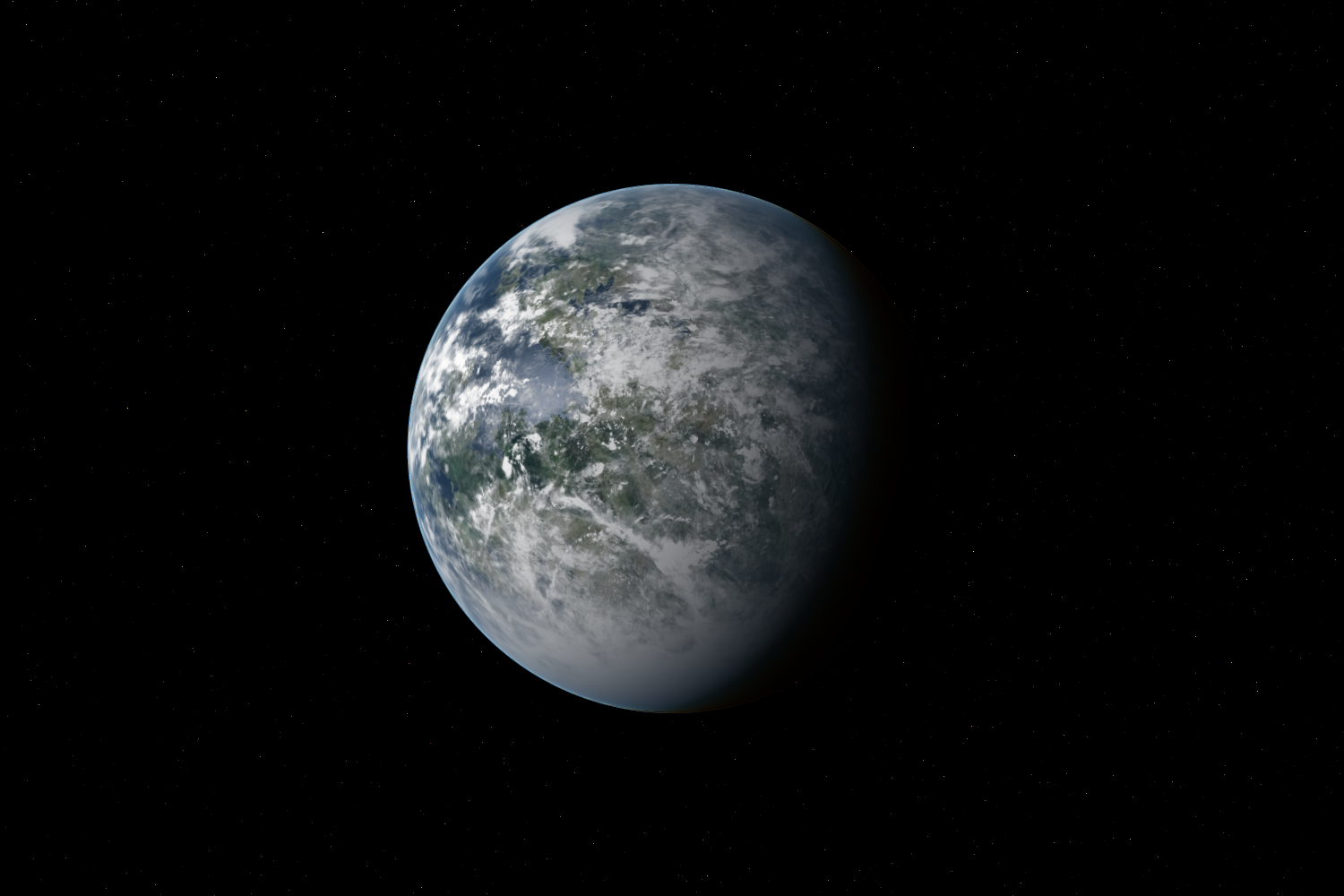
Assyria
c1
|
|
The system’s
habitable world orbits the brown dwarf Assyria c. C1 is a mountainous world
with deep valleys and rich natural resources. Earthquakes are common on this
heavily tectonically active world. The winters can get very cold on this
world as brown dwarf moves away from the parent star on its eccentric orbit.
The planet is close enough to the brown dwarf to receive sufficient heat to
keep it from freezing during the long winter months. This is the reason why
it is a habitable world unlike the outer moons.
|
|
|
|
|
|

|
Assyria
c2
|
|
The second
moon is a dry barren world.
|
|
|
|
|
|
|
|

|
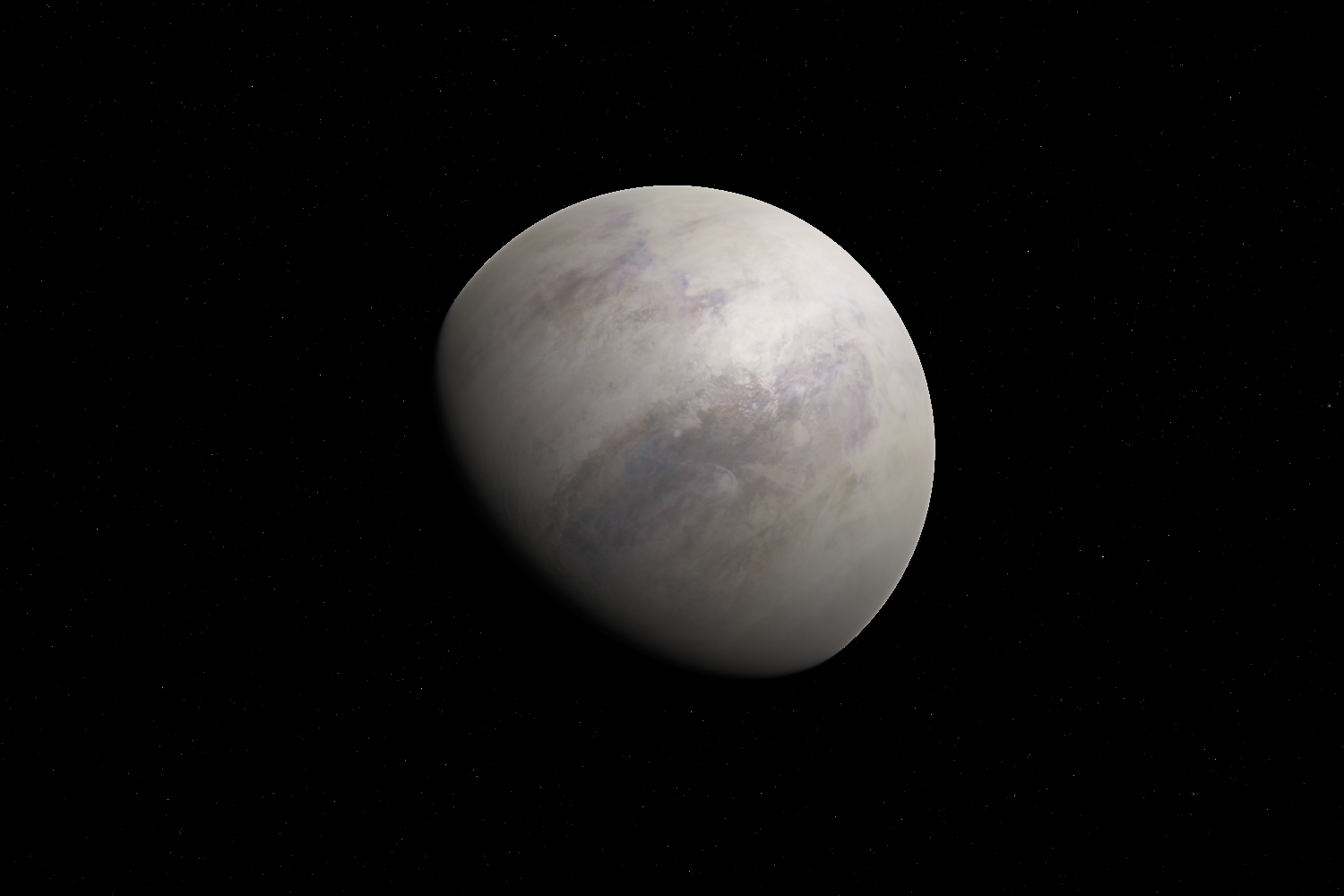
Assyria
c3
|
|
Venus would be
a lot like this cloudy moon if it were a bit cooler.
|
|
|
|
|
|
|
|
|
|

|
Assyria d
|
|
Cold gas giant
orbiting far away from the sun.
|
|
|
|
|
|
|
|
|
|